

Every Type of No-Tie Shoelace, Explained

This is a guide to no-tie shoelaces and the different ways to set up your shoes so you can stop tying them. There are more options than most people realize. Some are subtle and keep your shoes looking just like they do now, while others change the look on purpose or are built for sport. Below we walk through each type, how it works, how it looks, and which shoes and situations it suits best, so you can find the one that fits what you want.

Our best sellers
-
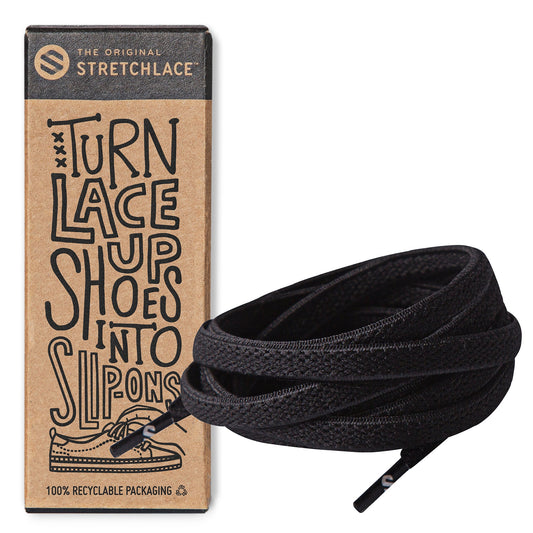
Flat Elastic Stretch Shoelaces
- Regular price
- $12.99
- Regular price
-
- Sale price
- $12.99
- Unit price
- per
-
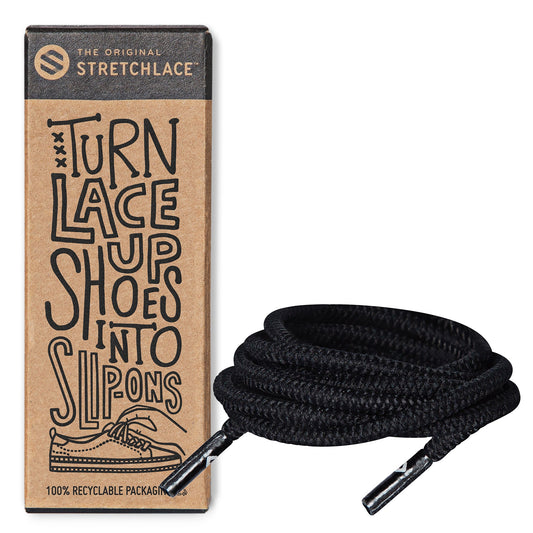
Round Elastic Stretch Shoelaces
- Regular price
- $12.99
- Regular price
-
- Sale price
- $12.99
- Unit price
- per
-
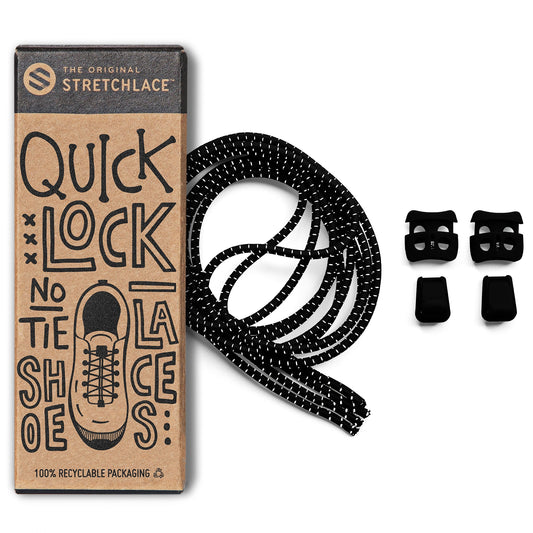
Quick Lock No-Tie Elastic Shoelaces
- Regular price
- $9.99
- Regular price
-
- Sale price
- $9.99
- Unit price
- per
-
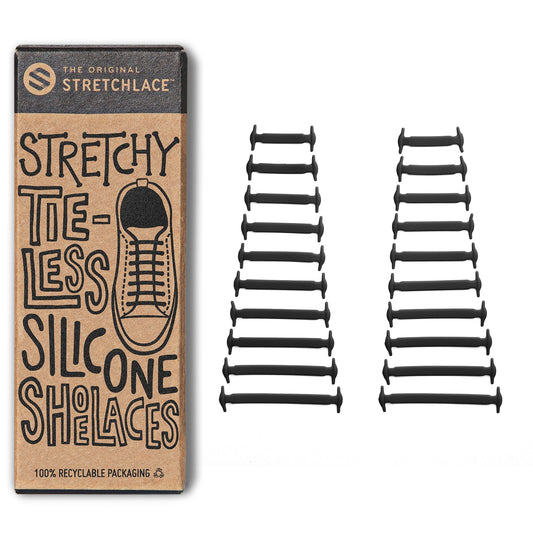
Tieless Silicone Elastic Shoelaces | 20 Straps
- Regular price
- $11.99
- Regular price
-
- Sale price
- $11.99
- Unit price
- per
Elastic shoelaces
Shoelaces that replace your originals and look like normal shoelaces.
Flat no-tie elastic shoelaces
Looks like normal laces

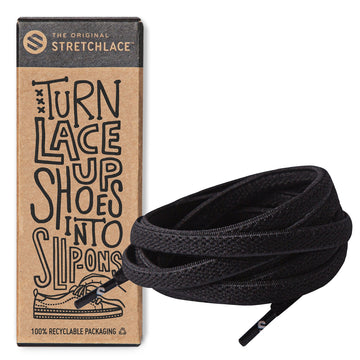
Flat woven elastic shoelaces thread through your eyelets exactly like the flat shoelaces your shoes came with, then stretch so you can slip the shoe on and off without tying. Because the weave and width match a standard flat shoelace, the shoe looks completely unchanged.
You lace them once, set the tension you like, and the elastic holds it. Best for sneakers, casual shoes, and kids' shoes where you want a no-tie setup nobody can spot. If your shoes came with flat shoelaces, this is the direct swap.
- Regular price
- $12.99
- Regular price
-
- Sale price
- $12.99
- Unit price
- per
Round no-tie elastic shoelaces
Looks like normal laces

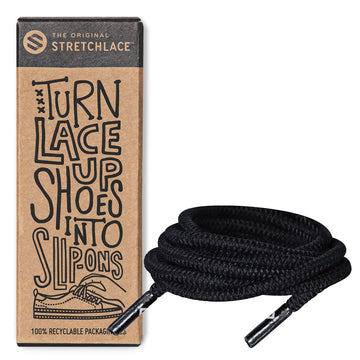
Round no-tie elastic shoelaces are the round-profile version, sized to match traditional round shoelaces. They stretch so the shoe opens enough to slide your foot in, then return to your set tension.
They suit dress sneakers, casual leather shoes, and many boots that came with round shoelaces. Length matters more here than with flat, since boots and high-eyelet shoes need enough length to reach, so check the eyelet count before you choose a size.
- Regular price
- $12.99
- Regular price
-
- Sale price
- $12.99
- Unit price
- per
Dress no-tie elastic shoelaces
Looks like normal laces

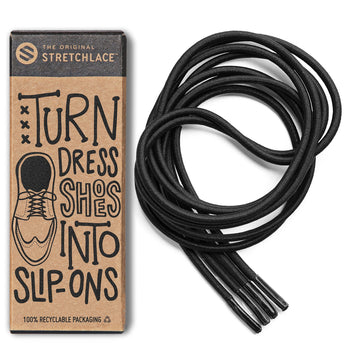
Dress no-tie elastic shoelaces are a thin, low-profile elastic sized specifically for dress shoes. They keep an oxford, derby, or loafer looking formal and properly laced while quietly working as a no-tie shoelace.
The thin profile is the point. A chunky athletic shoelace ruins a dress shoe, while a correctly sized dress elastic reads as a normal shoelace. Best for office shoes, event and wedding shoes, and anyone tired of re-tying dress shoes through the day.
- Regular price
- $12.99
- Regular price
-
- Sale price
- $12.99
- Unit price
- per
Silicone straps
A separate system: individual stretchy bands, one per eyelet pair, not a continuous shoelace.
Silicone no-tie shoelaces
Not a normal lace look (no traditional bow)

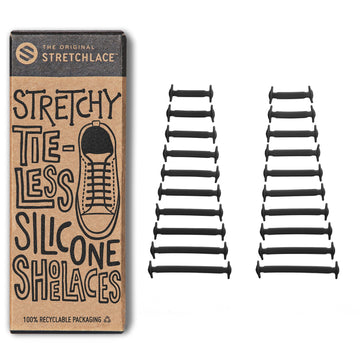
Silicone straps are a different product from elastic shoelaces. Instead of one continuous shoelace, you get a set of individual stretchy silicone bands and install one across each eyelet pair. The result is a modern, slightly sporty look with visible straps rather than a traditional shoelace line.
They are waterproof, wipe clean, and let you mix colors across the eyelets. Best for sneakers and streetwear where the look is part of the appeal.
- Regular price
- $11.99
- Regular price
-
- Sale price
- $11.99
- Unit price
- per
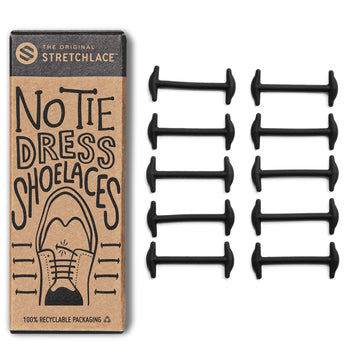
Silicone dress no-tie shoelaces
Not a normal lace look (no traditional bow)

Silicone dress laces take the silicone strap idea and make it formal. They sit low and discreet in a slim, dark profile, so an oxford or derby still reads as properly laced, just no-tie, without the sporty look of standard silicone straps.
You get the silicone benefits, waterproof, easy to wipe clean, and durable, in a dress-appropriate form. Best for dress shoes where you want silicone's low maintenance but a refined look.
- Regular price
- $9.99
- Regular price
-
- Sale price
- $9.99
- Unit price
- per
Cord-lock and toggle systems
Round elastic plus a locking toggle you cinch to set tension.
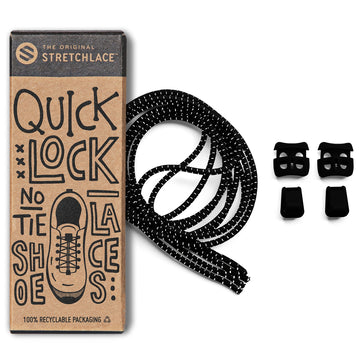
Cord-lock no-tie shoelaces (speed laces)
Not a normal lace look (no traditional bow)

Cord-lock shoelaces, also called speed laces, pair a round elastic cord with a spring-loaded toggle. You pull the cord to the tightness you want and click the toggle to lock it, with no knot involved.
They are fast to adjust on the fly, which is why runners and gym users favor them, and they hold tension securely during hard movement. The trade-off is a visible toggle at the top of the shoe, so they read as athletic. Best for running, training, and quick on-off. Our version is the Quick Lock.
- Regular price
- $9.99
- Regular price
-
- Sale price
- $9.99
- Unit price
- per
Clips and keepers
Keep your existing shoelaces and stop tying them.
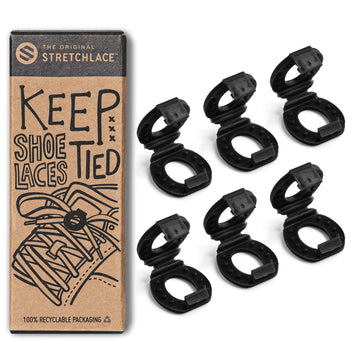
No-tie bow clips and lace buckles
Looks like normal laces

This is the lowest-commitment no-tie option, because you keep your existing shoelaces. You tie the shoe once, then a small clip or buckle holds the bow so it never comes undone and you never tie it again.
Nothing about the shoe's appearance changes beyond the small clip, and you can move the clips between pairs. Best for people who like their current shoelaces, want a reversible fix, or are buying for a child still learning. It does not give you the slip-on stretch of elastic shoelaces, since the shoe still opens only as far as your tied shoelaces allow.
- Regular price
- $8.99
- Regular price
-
- Sale price
- $8.99
- Unit price
- per
Other no-tie systems
Other systems in the category, included for a complete picture.
Magnetic no-tie shoelaces
Not a normal lace look (no traditional bow)

Magnetic shoelaces use elastic shoelaces that end in two magnets which snap together at the top of the shoe. The closure is fast, works one-handed, and is popular for accessibility needs.
The trade-off is a visible magnetic device sitting at the top of the lacing, so the shoe clearly looks modified. Best for quick on-off and one-handed use where the hardware is not a concern.
Beaded shoelaces
Not a normal lace look (no traditional bow)

Beaded shoelaces are an elastic cord with molded beads spaced along it. The beads catch at the eyelets to hold tension, so there are no clips or toggles to manage.
The look is distinctive and clearly not a traditional shoelace, so these appeal to people who like the beaded style or want a tool-free install.
Coil shoelaces (curly laces)
Not a normal lace look (no traditional bow)

Coil shoelaces are plastic spirals that hold their curl and spring back into shape. They are colorful and playful, which makes them a favorite for kids' shoes and novelty looks.
They do not resemble a traditional shoelace at all, and tension is fixed by the coil rather than adjustable, so they are more about fun and convenience than a clean look.
Lace anchors
Not a normal lace look (no traditional bow)

Lace anchors are small fixtures that lock your existing shoelaces inside the shoe so you can slip it on without untying. Your real shoelaces stay in place, but they are locked rather than tied in a bow, so the front of the shoe does not read as a normally laced shoe.
The trade-off is a more involved one-time install, since you thread and secure the anchors inside the shoe, and changing tension later means redoing that setup.
Which type is right for you
- Want your shoes to look exactly the same? Flat or round no-tie elastic shoelaces.
- Dress shoes? Dress no-tie elastic shoelaces, or silicone dress for an easy-clean option.
- Modern, customizable sneaker look? Silicone no-tie shoelaces.
- Running or want adjustable, locked tension? Cord-lock (speed) shoelaces.
- Love your current shoelaces and just hate tying? No-tie bow clips.
- Want fast, one-handed on and off, including for accessibility needs? Magnetic shoelaces (visible clasp at the top).
- Buying for a young child? No-tie elastic or silicone shoelaces are easiest and safest, with bow clips as a step up once they are learning to tie. A combination works well too.
Where to start
If you want a no-tie shoelace that keeps your shoes looking normal, no-tie elastic shoelaces in flat, round, or dress profiles are the closest match to what your shoes came with. For a sportier look, silicone straps or cord-lock shoelaces do the job. The Original Stretchlace makes no-tie elastic shoelaces in all three profiles, plus silicone straps, silicone dress, quick-lock shoelaces, and bow clips, so you can match the type to the shoe. Browse the full range →
Related guides
- Best no-tie shoelaces for kids who can’t tie yet
- No-tie shoelaces for older or arthritic hands
- Best no-tie laces for running and sports
- Find your perfect shoelace length
- Elastic shoelaces vs lock laces: which is better?
- Best shoelaces for a broken foot or post-surgery recovery
Quick FAQ
- Do no-tie shoelaces stay tight? The good ones do. Elastic plus a proper anchor, toggle, or clip holds tension, and you set it once.
- Do they fit any shoe? There is a type for essentially any lace-up shoe, whether sneaker, dress, or boot. Check the length for boots and high-eyelet shoes.
- Are they hard to install? Most go in once, in a few minutes, with no tools.